
Optimizing Onboarding
& Creation
Flow to
Increase Activation
Context
Hadron works like Patreon built on smart contracts. An artist launches their own token, and fans buy it to support the artist and unlock access to their content.
The token’s price is set by a curve: the more tokens have been bought, the more the next one costs. The artist chooses the starting price and the shape of the curve.
My role
Product audit
A full web app audit, identifying weak points in user activation, retention and monetization.
Artist flow
The artist’s full journey across the platform.
Onboarding set-up
The artist’s first experience, from sign-up to a token ready to share.
From outdated UI to a system that scales
Rebuilt the outdated UI and scaled the design system to ~400 component variants, redesigning 75+ screens. This removed friction across key funnel steps and helped the team ship experiments faster.
The result first
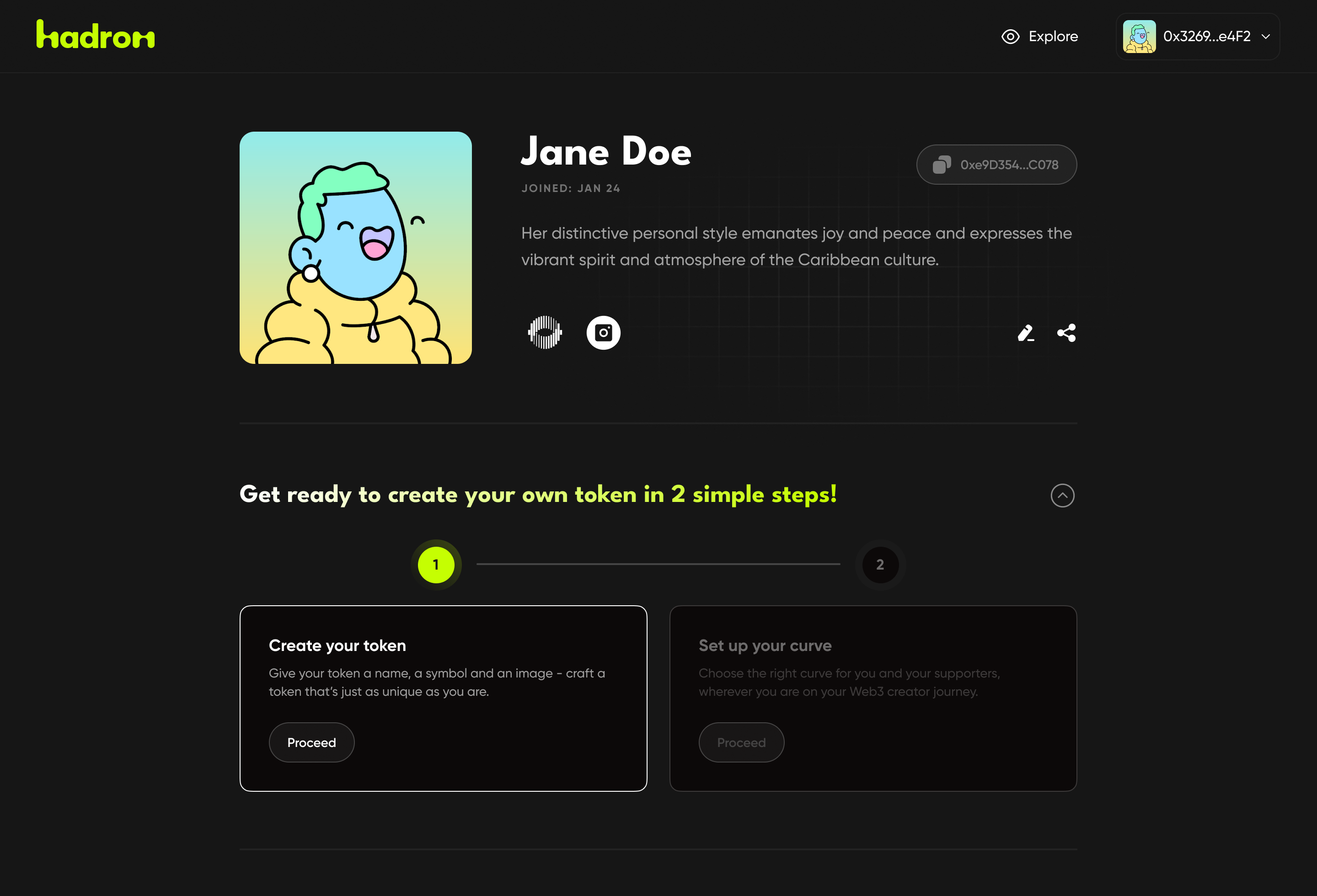
The new onboarding: an artist creates a token, sets up the price curve and immediately sees how much they can earn. Next, I’ll show how we got here.
How it started
Uploading content was the first big task in onboarding, and 54% of artists didn’t do it in their first session.
Artists came to find out how much they could earn, but the token and price curve only appeared after the profile, content and tiers. Only 22% got as far as sharing a token.
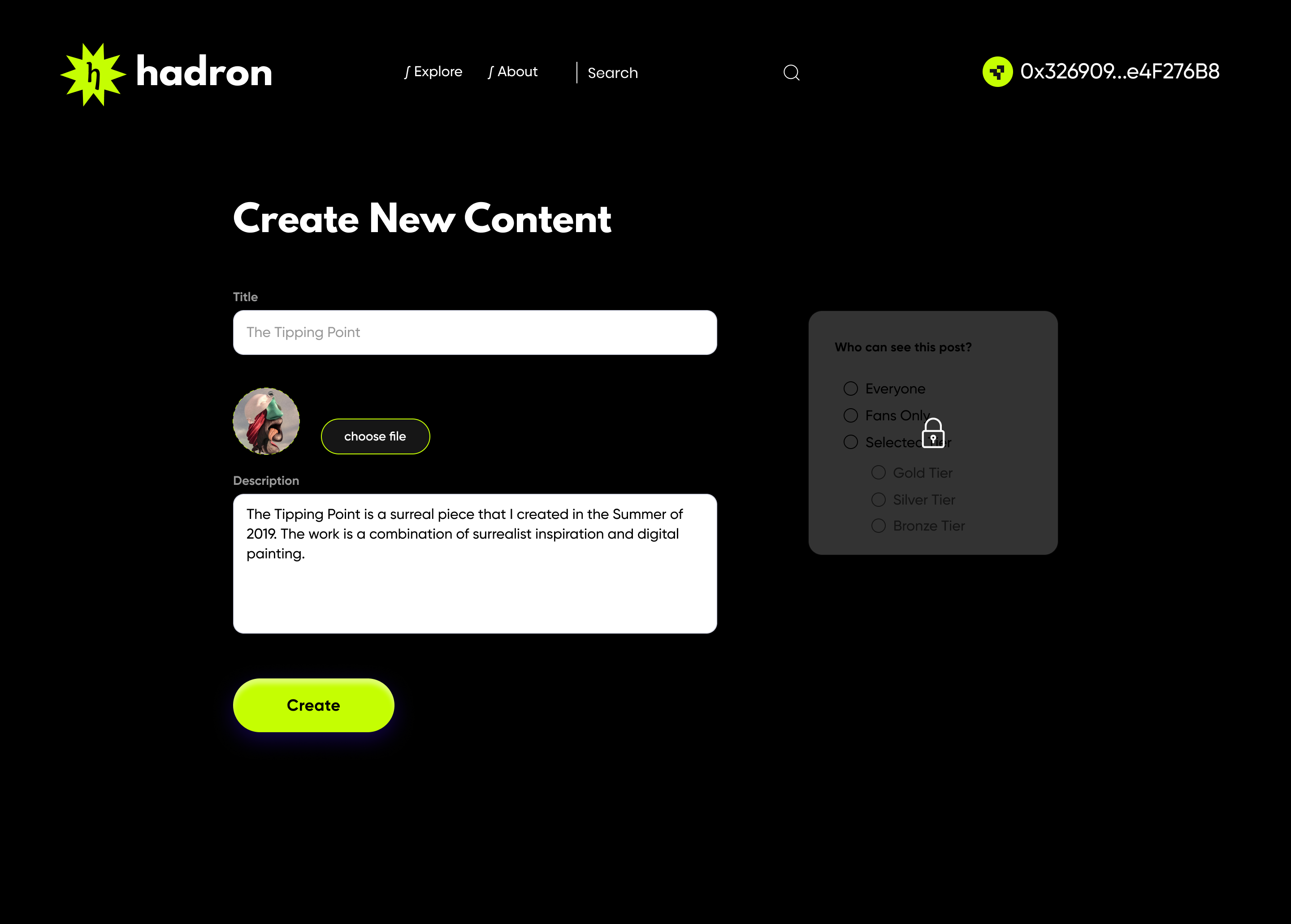
Before the redesign: the original content upload screen
The bottleneck
The first heavy step in onboarding was uploading content.
The profile, content and tiers all came before the token and curve. Artists only got an answer to their main question at the end of a long setup, and 54% didn’t upload content in their first session.
Old flow funnel, % of sign-ups
What does an artist want to know most?
How much they can earn.
What we found
Earnings depend on the curve, and the curve is exactly what artists didn’t understand.
This came out of both the quantitative and the qualitative research.
How the curve works
Artists didn’t fully understand how the curve works, or why it was needed in the first place.
Price and purchases
The link wasn’t clear: how the starting token price, fan purchases and the curve coefficient together drive the price up.
The solution
We moved the answer to the start. An artist first creates a token and sees how much they can earn, then adds content.
Before
- Sign-up
- Profile
- Content
- Tiers
- Token and curve
- Sharing
After
- Sign-up
- Token and curve
- Sharing
- Profile and content, optional
Token and curve come first
Right after sign-up, an artist creates a token and sets up the price curve. The main onboarding now takes a few minutes.
Earnings preview during setup
An artist sees how much they can earn depending on how many fans they bring. It shows the link between price, purchases and the coefficient that people didn’t understand before. A short video explains the mechanics.
Content no longer blocks launch
The profile and content are now optional at the start. This was possible because loyal fans buy a token even when there’s no content yet.
Results
Content became optional, and 64% of artists still upload it in their first session or within the first 7 days.
Artists add content to a token that’s already live, so they know why they’re doing it and who will see it.
| Metric | Before | After | Change |
|---|---|---|---|
| Steps to first value | 4 | 1 | −3 |
| Shared a token | 22% | 35% | +60%* |
| Uploaded content | 46% | 64% | ≈ +40%* |
| Activated artists (token, sharing and content) | 22% | 31% | ≈ +40%* |
* Estimate. Content, which also counts towards activation, was measured over different periods: before, the first session only; after, the first session and the first 7 days.
For the platform
About 90 more fully activated artists per 1,000 sign-ups.
Each of them brings new fans and token purchases.
Conclusion
Onboarding should first answer the question a person came with.
Hadron asked artists to put in work before showing them what it was for. We didn’t remove content, we moved it to the moment when an artist already sees their token and possible earnings.